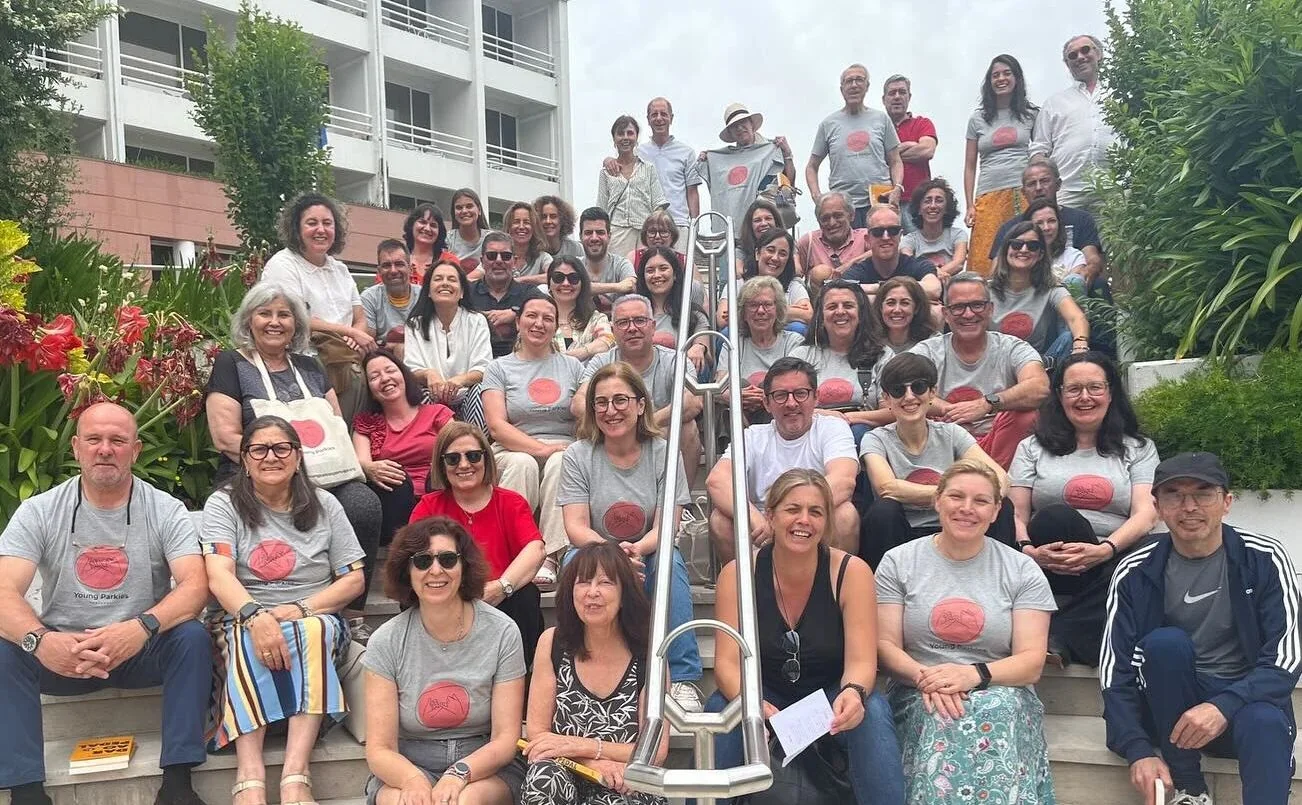
“It all started when I began having difficulty brushing my teeth, my handwriting got smaller and unconsciously I started using my left hand more, although I’m right-handed.” Maria do Carmo Teixeira Bastos was diagnosed with early onset Parkinson’s disease in 2018. She was 44.
With 11.8 million patients worldwide and growing, Parkinson’s is the world’s second most common neurodegenerative disease. There is currently no cure. Contemporary lifestyle factors, including stress, are playing an important part in the disease’s spread.
Like a secret agent, Parkinson’s works underground for years without being noticed. Until one or more symptoms sound the alert and lead an individual down the zigzagging path to clinical diagnosis.
You have Parkinson’s!
The Resident asked Maria do Carmo whether she had felt devasted or relieved to finally receive a diagnosis.
“Both. But without doubt relief, because I no longer felt the same person and was becoming really concerned about what could be wrong.”
After the initial shock of her diagnosis, she set about adapting to a new reality. “I’m not someone who worries over much about the long-term. I tend to think if I’m ok yesterday, I’ll be ok tomorrow, so nothing really changes. The good thing was to know what I had, so I could act.”
Founding Young Parkies Portugal
Maria do Carmo, whose parents are both doctors, visited the Portuguese Parkinson’s Association, in Porto.
Exchanging with other Parkinson’s patients, she began to imagine an innovative platform that could be a meeting place for all Parkinson’s stakeholders: patients, doctors, researchers, psychologists… Everyone would benefit if given the opportunity to talk to each other.
In 2021, Maria do Carmo founded Young Parkies Portugal (YPP), becoming the new not-for-profit’s president. “Our aim was to help young patients live an independent life and access more knowledge to better manage their disease.”
A private investment banker by profession, Maria do Carmo is still looking after her clients. “I love it,” she enthuses. She says her work as a banker has influenced the governance of YPP. “When you work in the social sector, you need to show you’re professional to gain credibility and secure private funding to provide more services to your members and equally have a clear mission and transparent accounts.”
The Young Parkies Portugal website is commendably clear, with a wealth of Parkies’ testimonials complemented by expert knowledge and advice. Above all, visitors are encouraged to feel they are not alone, but part of a community which provides opportunities for discussion and information about every aspect of the disease: exercise, nutrition, mental health, caring for a Parkie …
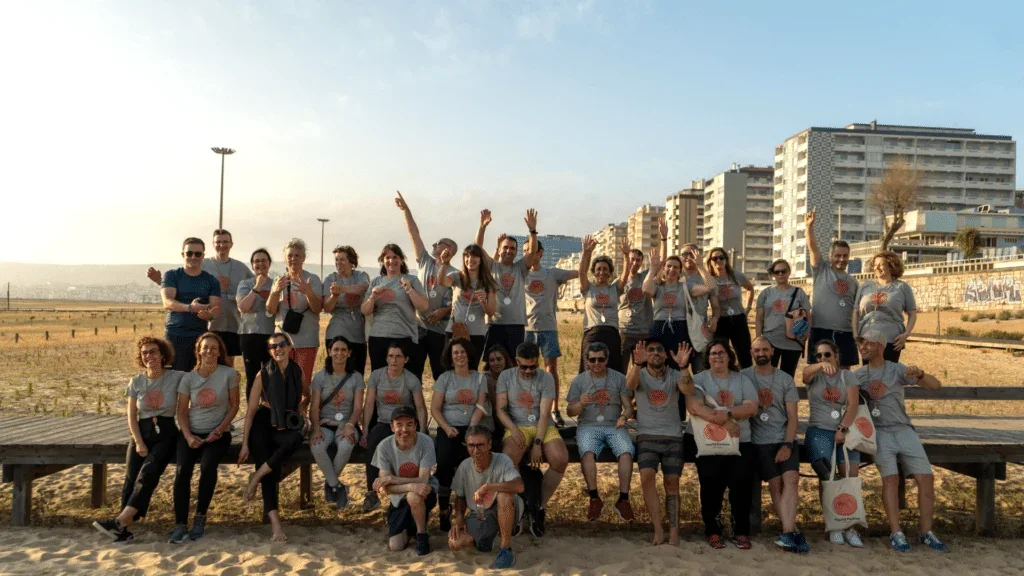
YPP group
Parkinson precoce
So, what’s the difference between a ‘Young Parkie’ (Parkinson precoce in Portuguese) and other Parkinson’s patients, mostly diagnosed in their sixties or seventies?
Among Portugal’s 20,000 Parkinson’s patients, between 2,000 and 3,000 individuals were diagnosed before reaching the age of 50, sometimes even in their thirties.
“The symptoms that affect Young Parkies tend to be the non-motor ones; it’s more about mental health and having trouble in accomplishing all the tasks we need to do in a single day. As it hits you at a stage of life when you’re usually at the top of your game, in your family, professional and social life, processing the diagnosis is huge, particularly as you may already have Parkinson’s symptoms such as depression, apathy or slower movements … Your dreams go out the window, and you’re forced to redefine your priorities.”
“Become informed but not obsessed”
What advice does she have for a person who has just been diagnosed as a Young Parkie? “Become informed but not obsessed about gathering information. Take your time to choose the clinician you want to accompany you on this marathon and then trust them.” How about seeking a second opinion? “I think it’s normal to go for a second opinion, people don’t have to be shy or embarrassed. We have a right to choose the specialist we would like to be accompanied by.” She references empathy as an indispensable skill for a clinician.
Parkinson’s ‘modifying agent’: exercise
Maria do Carmo has no doubt exercise is Parkinson’s modifying agent, slowing disease progression and adding to quality of life. “Exercise acts not only on your body, but equally on your mind. It’s the best treatment we can have and forms a strong joint-venture with traditional medicine.” She has been playing competitive tennis since the age of eight and still does. Tennis requires the strategizing skills also essential to managing Parkinson’s.
Caring
Contemporary society is not always very tolerant of fragility. Models that favour strength and performance predominate, particularly among younger generations. Parkinson’s patients can often live for years, or even decades, more or less as they have always done. But this ‘more or less’ becomes relative as the person experiences progressive physical and cognitive impairment.
The presence of partners, family and friends is hugely important here. However, the role of ‘carer’ can be challenging to fulfil. Carers sometimes feel their own horizons are closing in, alongside those of the Parkinson’s patient who demands and needs so much attention.
Promoting a long-term holistic approach
Maria do Carmo Teixeira Bastos has a positive opinion of the medical care available to treat Parkinson’s in Portugal, as well as the financial support provided by the state to patients for their meds, and in particular the all-important levodopa taken to boost patients’ dopamine levels.
“In the last 30 years, we’ve had a huge improvement in the quality-of-life which medicine can give to Parkinson’s patients.” She is encouraged by current technical evolutions in medical treatment, such as incisionless high-intensity focused ultrasound (HIFU) treatment, already performed in Porto, but for now the only centre in the country. As more patients use this treatment, she hopes its cost will come down.
And what would she improve in Parkinson’s medical eco-system? “Now, our goal is to create a movement that promotes a long-term, holistic approach, involving all the medical actors. It can be difficult for politicians elected every four years to reflect long-term, but Portugal needs a smart strategic approach, not only for Parkinson’s but equally for other skyrocketing chronic diseases.”