2026: falling forward
Let’s take a summer rain check on what’s going on nationally, and further afield
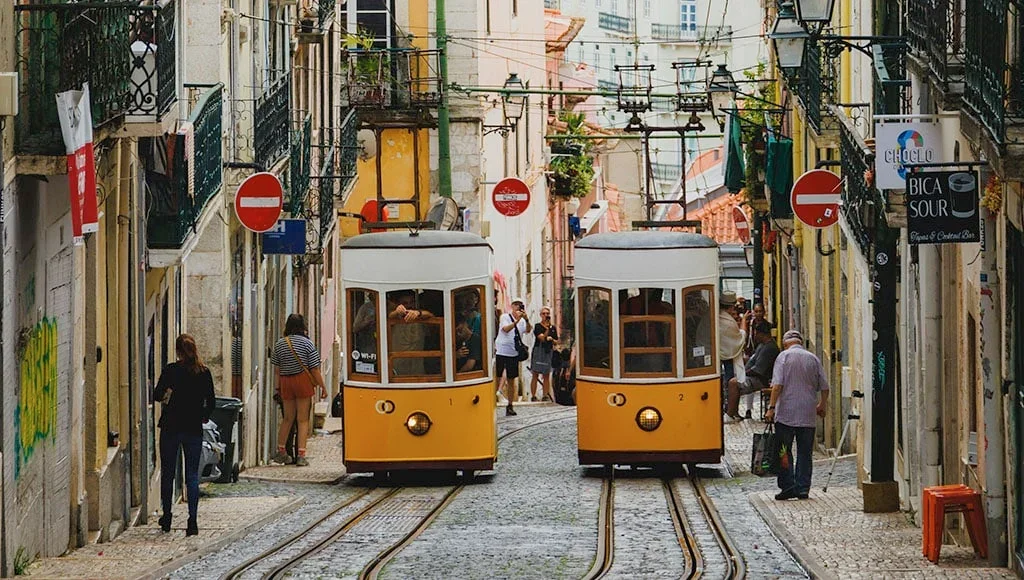
Photo: HENRY REN/UNSPLASH
The number one issue, remaining obstinately at the centre of political conversations and people’s concerns, must be the cost of living. With housing costs coming at the top of the list, Bruce Hawker wrote recently in The Resident about Portugal’s insufficient supply of homes, calling out “not enough new homes, shortages of skilled (construction) labour and slow planning processes”.
Glaring income disparities also refuse to go away. The 50 wealthiest families in Portugal hold combined wealth equivalent to 16.5% of GDP. There’s no need to squeeze everyone into the same size shoe, but the social exclusion rate is still at 18.6% of the Portuguese population (nearly two million people), even though it has declined slightly, and would be over 40% without social transfers!
Hello, black economy.
Would it be inelegant to suggest some of those fortunate 50 families might consider signing up to the international Patriotic Millionaires movement, whose members request to be taxed more? No, that’s not a printing error. They believe a higher tax contribution from the very wealthy will not only contribute to a more equitable society but equally dilute the appeal of authoritarianism.
Hot, hot, hotter
On January 28, Storm Kristin, caused 14 deaths and €6 billion damage in the Central Region, followed by Storm Leonardo days later. Portugal applied for European Union Solidarity Fund support. There have been despairing delays in distributing a €2.5 billion support package, blamed on staffing shortages at commissions responsible for processing the paperwork. Really?
Climate adaptation expert Tiago Capela Lourenço told The Resident, “We are now in the new normal”. We know that Europe is warming at twice the rate of any other continent.
The small Northern Portugal city of Guimarães was named European Green Capital 2026.
This year has so far been Portugal’s second worst wildfire year of the last decade.
The country continues to do well with renewables accounting for a 75.6% share of electricity generation in the first half of this year (compared to Spain with 55% and the UK with 53%), placing Portugal in fourth position in Europe. Investment in grid modernization is needed sooner rather than later …
In the second round of voting for the presidential election, on February 8, the Socialist António José Seguro defeated the far-right Chega candidate, André Ventura, by 67% to 33%.
The Social Democratic Party (PSD) governs Portugal without a parliamentary majority, as the Prime Minister Luís Montenegro refuses to ally with Chega. Although one recent poll gave Montenegro a 64% positive evaluation, much of the public remains sceptical the government’s policies are translating into a better standard of living.
‘For ever’ wars
On the other side of Europe, the war between Russia and Ukraine shows worryingly few signs of ending soon. Speaking ahead of the fourth anniversary of Russia’s full-scale invasion of Ukraine on February 24, 2022, Ukraine’s Ambassador to Portugal, Maryna Mykhilenko, told Jornal de Notícias the conflict was a “neocolonial war based on historical revisionism”, and argued Ukrainian territorial concessions would not satisfy Russia or bring lasting peace.
A few days later, on February 28, the bombs of a second war of tsunamic geopolitical consequence began to fall on the Iranians. President Donald Trump had decided on another petulant and unthought-through military venture, part vanity project, part childish one-upmanship on Barrack Obama, swayed by the Israeli Prime Minister Benjamin Netanyahu.
Five months on, the Trump administration has achieved none of its war objectives, and the world is living with the consequences: fragilized supply lines, increased fuel costs and plummeting respect for the United States as a reliable international actor.
Against this background of authoritarian leaders starting their ‘for ever’ wars, Portugal was able to quietly congratulate itself when, on April 2, the nation celebrated the 50th anniversary of the Constitution. No small achievement for a constitution born out of the still warm ashes of the Salazar dictatorship.
In May, 15 Lisbon police officers were detained over the alleged torture of migrants and homeless people. This was in addition to multiple substantiated reports of police brutality (including alleged rape and sexual assault), disproportionately targeting immigrants and the homeless, pointing to a police culture and leadership in urgent need of a shakeup.
For ever thus
Portugal’s state health service, the SNS, is a boulder proving hard to shift. With growing waiting times, overcrowded A&E departments, shortages of doctors and nurses, the situation has worsened compared to 2025, and bears similarities with the woes of the NHS in the UK and France’s state health service.
Hope?
Portugal’s GDP growth has slowed, with the European Union’s Spring 2026 Economic Forecast predicting modest growth of 1.7% this year, compared with 2.4% for Spain, and an EU average of 1.7%. However, the Portuguese can take comfort that public debt at 91% is down 4% on last year (UK public debt is 95%, and the EU average 83%). Portugal also has favour with the four main ratings agencies, known for giving finance ministry officials sleepless nights, who have handed out comfortable A ratings.
In June, the government announced plans for seven ‘Sines-style’ (the Sines Data Campus has already attracted €25 billion of private investment) mega data centres across the country. The State is rolling out a ‘Portugal as European tech hub’ narrative, touting the benefits of the country’s inexpensive renewable energy. This, however, leaves many, for now, unanswered environmental and social impact questions, not least uncertainty about who will foot the grid costs – investors or Portuguese consumers through network tariffs?
A KPMG Global Trust survey found 88% of Portuguese expect positive results from AI, 62% fear job losses, and 80% want AI regulated.
Tourism value
The huge surge in tourism numbers appears to be slowing, with more gradual growth expected in 2026 than in recent years. Portugal’s tourism authorities are placing their sights on higher-value visitors whom, they hope, will also wish to return to Portugal.
Skilful marketing is not being helped by the rising cost of air fares caused by jet fuel shortages (the Iran war again), messy implementation of the new EU Entry/Exit System for visitors arriving from outside the EU, which generated epic queues earlier in the summer, and repeated heatwaves and wildfires in Southern Europe.
Forecast to account for 20% of national GDP by 2030-2035, tourism will arguably carry too much weight in the Portuguese economy.
Just a thought. The new UK Prime Minister, Andy Burnham, is facing similar challenges to some of those mentioned in this article. A sluggish economy; the cost of living; an overwhelmed NHS; giving young people hope in their future; supervising AI; and a populist authoritarian party breathing down the government’s neck.
First published The Resident, August 2026